Azobé wood: Strength and durability from the African rainforests
Azobé wood, scientifically known as Lophira alata Banks ex Gaertn.f., is a tropical hardwood species originating from West Africa. This wood type is renowned for its extraordinary strength and durability, making it ideal for heavy constructions and outdoor applications.
For those seeking hardwood products that can withstand the test of time, azobé is an excellent choice.
Origin and naming
Azobé is known by various names, depending on the region:
- Aba (Nigeria)
- Bongossi (Cameroon, Germany)
- Ekki (Nigeria, Great Britain)
- Hendui (Liberia, Sierra Leone)
This diversity in naming reflects the widespread appreciation for this wood across different cultures and industries.
Characteristics and properties of azobé
Azobé stands out due to several remarkable properties:
-
Density: 940-1100 kg/m³ at 12% moisture content, fresh 1100-1300 kg/m³.
-
Hardness: Extremely hard, making it highly wear-resistant.
-
Durability: Class 1/2 against fungi, very resistant to termites and marine borers.
-
Color: Fresh reddish-brown, changing to dark red to chocolate brown.
-
Grain: Coarse, often with interlocked or irregular grain.
These properties make azobé particularly suitable for garden design and heavy outdoor constructions.
Applications of azobé wood
Thanks to its exceptional properties, azobé is used in various sectors:
-
Water construction: Lock gates, revetments, weirs, docks, sheet piling.
-
Bridge construction: Bridge decks, structures.
-
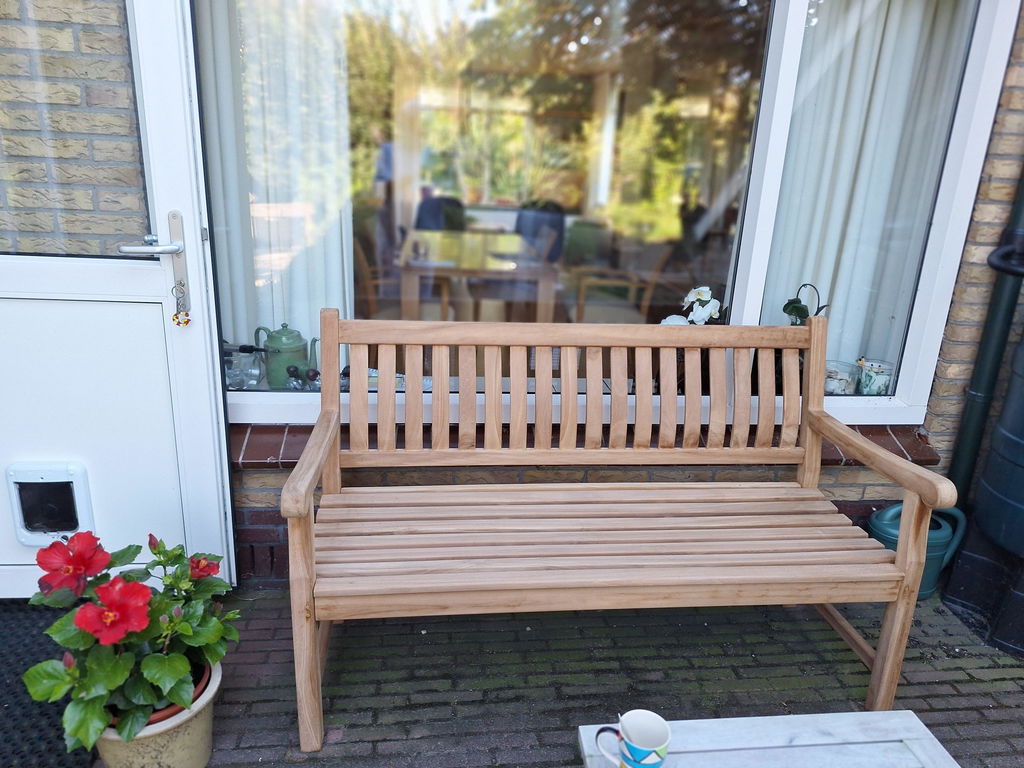
Landscape architecture: Wooden garden benches, park benches, fence posts.
-
Railways: Sleepers due to high wear resistance.
-
Heavy constructions: Industrial floors, dragline mats, support structures for heavy machinery.
-
Special applications: Noise barriers, chemical installations, rail tracks for rubber-tired trains (Paris Metro).
Processing and maintenance
Processing azobé requires specific techniques:
- Despite its hardness, machine processing is possible, but with specific considerations.
- Drying must be done very slowly to prevent cracking.
- Pre-drilling is necessary when fastening with screws or nails.
- Iron tends to corrode when in contact with azobé; the use of stainless steel is recommended.
- Gluing can be problematic due to the high density.
For the proper care of azobé products, check out our accessories collection.
Sustainability and environmental aspects
When choosing azobé, it is important to consider the environmental aspects:
- Azobé grows in tropical West African forests, making sustainable forestry essential.
- The trees can grow up to 50 meters tall with trunk diameters of up to 1.8 meters.
- The long lifespan and high durability of azobé partially offset the environmental impact of transport and harvesting.
For eco-conscious alternatives, check out our acacia products collection.
Conclusion: The unparalleled strength of azobé
Azobé wood remains a top choice for projects that require extreme durability and strength. With a strength class of D70 according to NEN 5493, azobé delivers performance that lasts for decades in the most demanding environments.
Discover the possibilities of azobé in our collections:
Be inspired by the unmatched strength and durability of azobé wood and create outdoor spaces and structures that will last for generations.