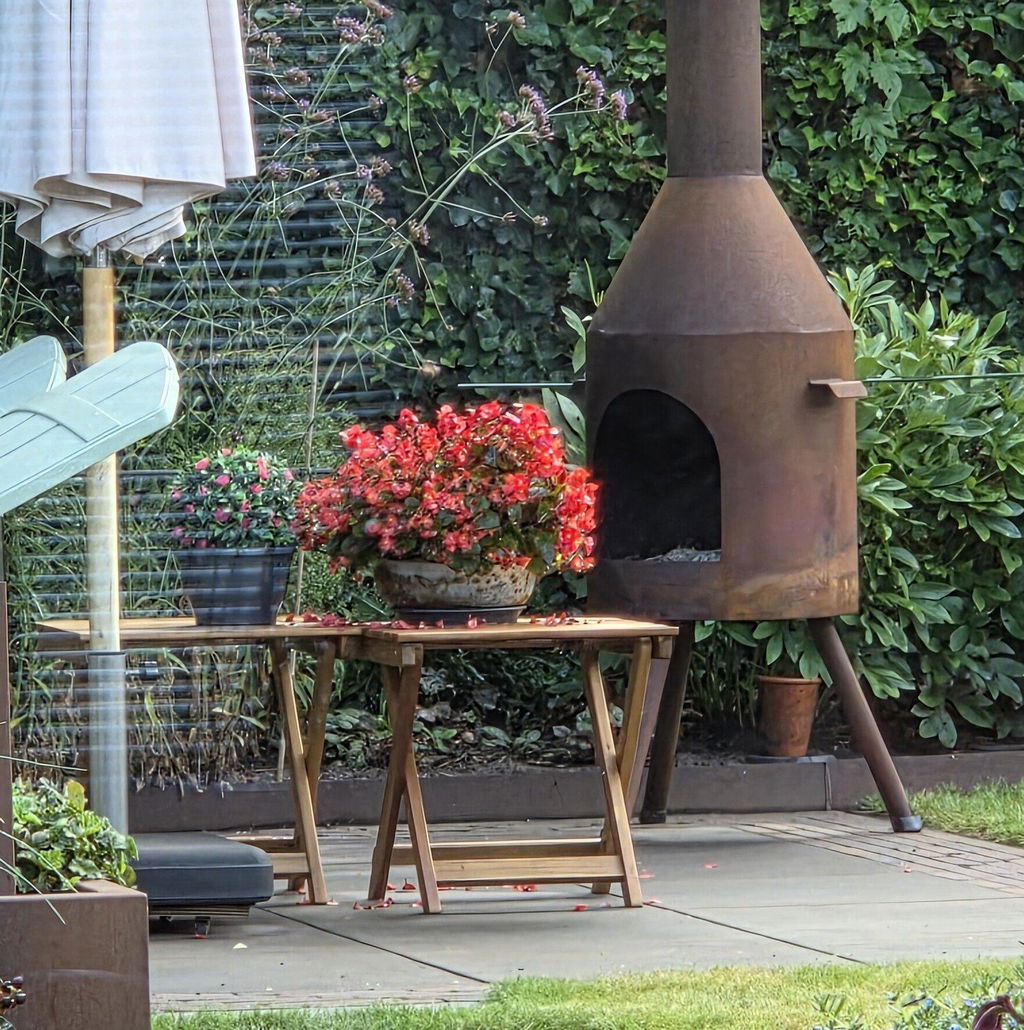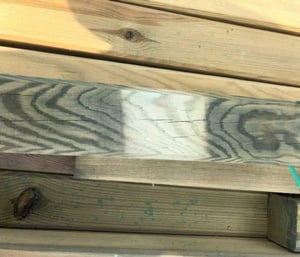
Every plank is a document — grain, knots and colour shifts record decades of growth in the forest.
Wood is one of the most honest materials you can bring into your home or garden. Unlike synthetics, it does not pretend to be something it is not. Its knots record where branches once reached for sunlight. Its grain maps the rhythm of wet springs and dry summers. Its colour shifts with the seasons, year after year. That is not a flaw — it is biography.
This guide walks through the defining characteristics of natural wood: what they are, why they occur, and how to read them rather than fight them. Whether you are considering garden furniture, a timber deck, or a solid-wood piece for indoors, understanding wood's character is the first step to making a choice you will not regret in ten years.
For context on how different timber species rank in outdoor durability, see our guide to wood durability classes. And if the clean lines of Nordic woodcraft appeal to you, our article on Scandinavian woodworking design is worth a read alongside this one.
The Natural Fingerprint: Knots and Grain
No two planks are alike. The reason is simple: every tree grows under unique conditions — soil composition, rainfall, wind load, competition from neighbouring trees. These forces are recorded permanently in the wood's structure.
Knots
A knot marks the point where a branch grew out of the trunk. As the tree expanded in girth, successive growth rings encircled the base of that branch — sometimes engulfing it entirely. The result is a dense, often darker oval or circle in the sawn plank.
- Knots are typically harder and more resinous than surrounding wood
- They vary in size and frequency depending on species and growing conditions
- Slow-growing northern conifers — pine, spruce — tend to produce tight, dense knots; faster-growing tropical species may produce fewer visible ones
- What furniture-makers once graded as a defect, contemporary designers now specify as a feature
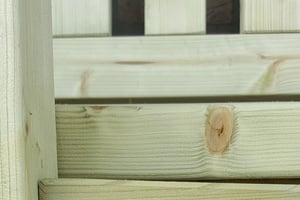
Knots are the tree's own record of where branches once grew — each one unique in shape and density.
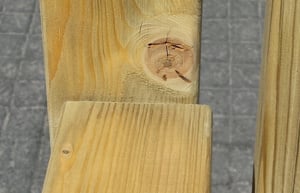
Grain lines trace the tree's annual rings — wider rings indicate fast, favourable growth seasons.
Grain
Grain is the visible pattern created by the arrangement of wood fibres and annual growth rings. How a log is sawn determines which pattern appears on the face of each plank — straight grain, cathedral (flame) figures, or interlocking patterns in tropical hardwoods like teak or meranti.
- Annual rings reveal the tree's age and how conditions varied year to year
- Wide rings = fast growth; narrow rings = slow, often denser growth
- Grain direction affects both strength and workability
- "Flame" or "cathedral" figures in flat-sawn boards are a favourite in Scandinavian furniture tradition — see more in our Scandinavian woodworking guide
A Living Material: How Wood Responds to Its Environment
Harvesting a tree does not stop wood from behaving like a natural material. It continues to interact with temperature, humidity and light — which is precisely what gives it a warmth that no laminate or composite can replicate.
Green Spots on Impregnated Wood
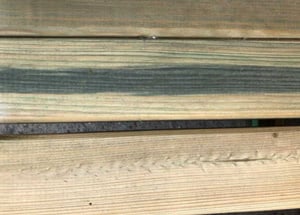
On pressure-impregnated timber you may notice greenish patches shortly after purchase or delivery. These occur where the impregnating agent — typically a copper-based compound — reacts with natural resins in the wood. They are entirely normal and fade gradually with UV exposure over a few weeks outdoors.
Surface Discolouration
Freshly milled wood often shows darker streaks, tannin bleed or uneven colouring across adjacent planks. This variation is inherent to natural material and evens out as the wood acclimatises and is exposed to light.
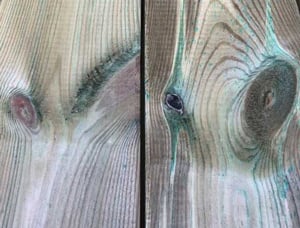
Green patches on impregnated timber are a normal reaction between preservative and natural resin — they fade in UV light.
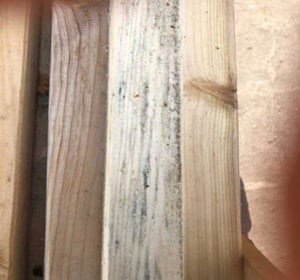
Surface mould on wood stored in humid conditions — generally superficial and easily removed with a mild brush and water.
Surface Mould
Wood stored or shipped in damp, low-ventilation conditions can develop a thin layer of surface mould. In most cases this is purely superficial — it sits on the outer fibres and has not penetrated the structure. A scrub with warm water and a stiff brush, followed by drying in open air, is usually all that is needed. It does not indicate the wood is structurally compromised.
For outdoor furniture, choosing the right species for your climate matters — hardwoods like teak sit in the highest durability class precisely because of their natural oil content and density. Our durability class guide explains the classification system in full.
Solid Wood in Practice
Understanding wood's characteristics is one thing — seeing them in well-crafted products is another. The pieces below illustrate how natural grain and honest construction translate to furniture built to last outdoors and in.
Curious about how solid wood compares to veneered construction? Read our deep-dive on the advantages of solid wood furniture.
Natural Movement: Why Wood Expands, Contracts and Sometimes Warps
Wood is hygroscopic — it absorbs moisture from the air when humidity rises and releases it when the air dries out. As moisture content changes, wood cells swell or shrink. This movement is entirely normal and is one of the most misunderstood characteristics of natural timber.
Warping
Warping occurs when different parts of a board absorb or release moisture at different rates — typically when one face is exposed to more humidity or heat than the other. Longer, wider boards are naturally more susceptible than shorter, narrower ones.
- Wood moves significantly more across the grain (width) than along it (length)
- Dense, slow-grown timber — such as hardwoods from tropical or northern climates — is generally more stable
- Proper drying and acclimatisation before use dramatically reduces the risk
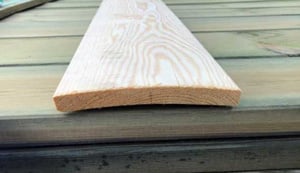
Warping is most common when wood absorbs moisture unevenly — allowing it to acclimatise first significantly reduces this risk.
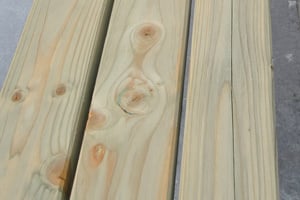
Surface checks and splits are the result of seasonal expansion and contraction — they are a mark of genuine timber, not a defect.
Checks and Splits
Hairline checks (fine surface cracks) and occasional splits develop as wood expands and contracts through the seasons. In structural terms they are rarely significant — they follow the grain and do not compromise the integrity of the piece. In character terms, they are the wood's equivalent of laugh lines.
If you use wood for burning and wonder how moisture content affects performance, our article on how dry wood should be for burning covers moisture measurement and optimal ranges in detail.
Practical tips to minimise warping and checking
Before installation or use:
- Allow new timber to acclimatise in the space where it will be used — ideally for several days, longer for wider boards
- Store horizontally with supports at regular intervals so no section is unsupported
- Avoid storage in direct sun or next to heat sources
In use:
- Apply appropriate oil or finish to slow moisture exchange — particularly important on end grain
- For outdoor furniture, allow airflow underneath and around pieces rather than placing directly on waterlogged ground
- Accept that some seasonal movement will always occur — it is the hallmark of genuine solid wood
A small degree of movement is what separates real wood from plastic imitation. It is not a sign that something has gone wrong.
The Poetry of Greying: How Wood Ages with Dignity
Left untreated outdoors, most timber species gradually shift from their original warm tone toward a silver-grey patina. This process — driven by UV radiation breaking down surface lignin — is purely cosmetic. It does not affect structural strength or durability class. What was once marketed as a problem is now actively specified by architects and landscape designers for its timeless, weathered aesthetic.
Year 1: Fresh, warm tones — the colour the tree's oils produce.
Year 2–3: UV begins to bleach surface lignin — a gradual silver shift starts.

Year 4+: The silver-grey patina stabilises — elegant, consistent and maintenance-light.
If you prefer to preserve the original warm colour, periodic application of a quality wood oil or UV-protective finish will slow — but not permanently stop — the greying process. Either path is valid: oiled wood stays warm and golden; unoiled wood goes silver and distinguished. The choice is entirely aesthetic.
Worth knowing: Greying affects only the outer cell layers of the wood — the same UV exposure that changes colour does not penetrate deep enough to affect structural fibres. A well-maintained hardwood garden table that has gone silver is just as strong as the day it was made.
Why "Imperfections" Are the Point
In a world of injection-moulded uniformity, natural wood offers something increasingly rare: genuine individuality. The characteristics that low-quality grading systems once penalised are precisely what interior designers, landscape architects and knowledgeable buyers now seek out.
| Characteristic |
Old view |
Why it matters today |
| Knots |
Weak point in the timber |
Visual focal point; proof of natural origin and growth history |
| Colour variation |
Inconsistency, reject grade |
Organic warmth and depth impossible to replicate in synthetic material |
| Surface checks / splits |
Structural defect |
Evidence of natural movement — the hallmark of genuine solid wood |
| Greying |
Neglect and deterioration |
Sought-after silver patina; requires less maintenance than oiled alternatives |
| Grain variation |
Unpredictability |
Each piece genuinely unique — no mass-produced duplicate exists |
The Japanese concept of wabi-sabi — finding beauty in impermanence and imperfection — is a useful lens here. Wood embodies it completely: born from a specific place and time, shaped by forces beyond human control, and continuing to evolve long after it leaves the forest. That is not a shortcoming. It is the entire point.
For ideas on how these natural characteristics translate across different interior styles, our guide on popular styles of wooden furniture for different rooms is a practical next step.
Common Questions About Wood Characteristics
Does greying mean my wood furniture is deteriorating?
No. Greying is a surface-level reaction to UV light breaking down lignin in the outer wood fibres. It does not penetrate into the structural core of the timber and does not affect load-bearing capacity or durability. A properly maintained hardwood piece that has turned silver-grey is structurally identical to when it was new.
Why does my new wood furniture have colour differences between planks?
Natural wood varies in colour from plank to plank — and even within the same board — because each piece came from a different part of the tree with its own growth conditions. Exposure to light and air will even out much of this variation over the first season. It is a mark of genuine solid wood, not a production error.
Are knots a sign of lower-quality wood?
Not necessarily. Knot frequency and size depend entirely on species and how the tree grew, not on production quality. Tight, sound knots — common in slow-grown northern conifers — are stable and fully structural. Loose knots that may fall out over time are a grading consideration, but in most garden furniture applications they are cosmetic rather than structural.
How do I know if a crack in my wood furniture is serious?
Surface checks — hairline cracks that follow the grain — are normal seasonal movement and are almost never structural. A crack to be concerned about would run across the grain, extend through the full thickness of a load-bearing member, or be accompanied by signs of rot (soft, discoloured fibres that crumble). When in doubt, contact the supplier for an assessment.
What is the difference between hardwood and softwood in terms of these characteristics?
Hardwoods (teak, oak, meranti, beech) generally grow more slowly, producing denser, more dimensionally stable timber with finer grain and fewer — but tighter — knots. Softwoods (pine, spruce, fir) grow faster and typically show more prominent knots and wider grain. For outdoor use, hardwoods generally sit in the higher durability classes. See our wood durability class guide for the full breakdown.
Wood That Earns Its Place Outdoors
The characteristics covered in this guide — knots, grain, movement, greying, natural colour variation — are not things to be engineered away. They are what make wood an honest, living material with a story that synthetic alternatives simply cannot tell. Whether you are furnishing a terrace in a Finnish summer, edging a garden bed, or choosing a piece for a hallway, understanding these traits puts you in a far better position to choose confidently and maintain well.
Browse our full range of solid hardwood and impregnated garden furniture — each piece designed to be used, weathered and enjoyed for years.