Teak Garden Benches — Built to Last, Beautiful From Day One
A solid teak garden bench is one of those purchases you make once and never regret. The benches in this collection are crafted from genuine teak by Tekora — a dense, naturally oily hardwood that shrugs off British rain, frost and UV without any special treatment. Whether you want a compact 120 cm bench for a courtyard or a generous 250 cm statement piece for a lawn, you'll find the right model here. Scroll through the range below, then use our buying guide underneath the grid to choose the ideal size and style for your outdoor space.
Which Teak Garden Bench Is Right for You?
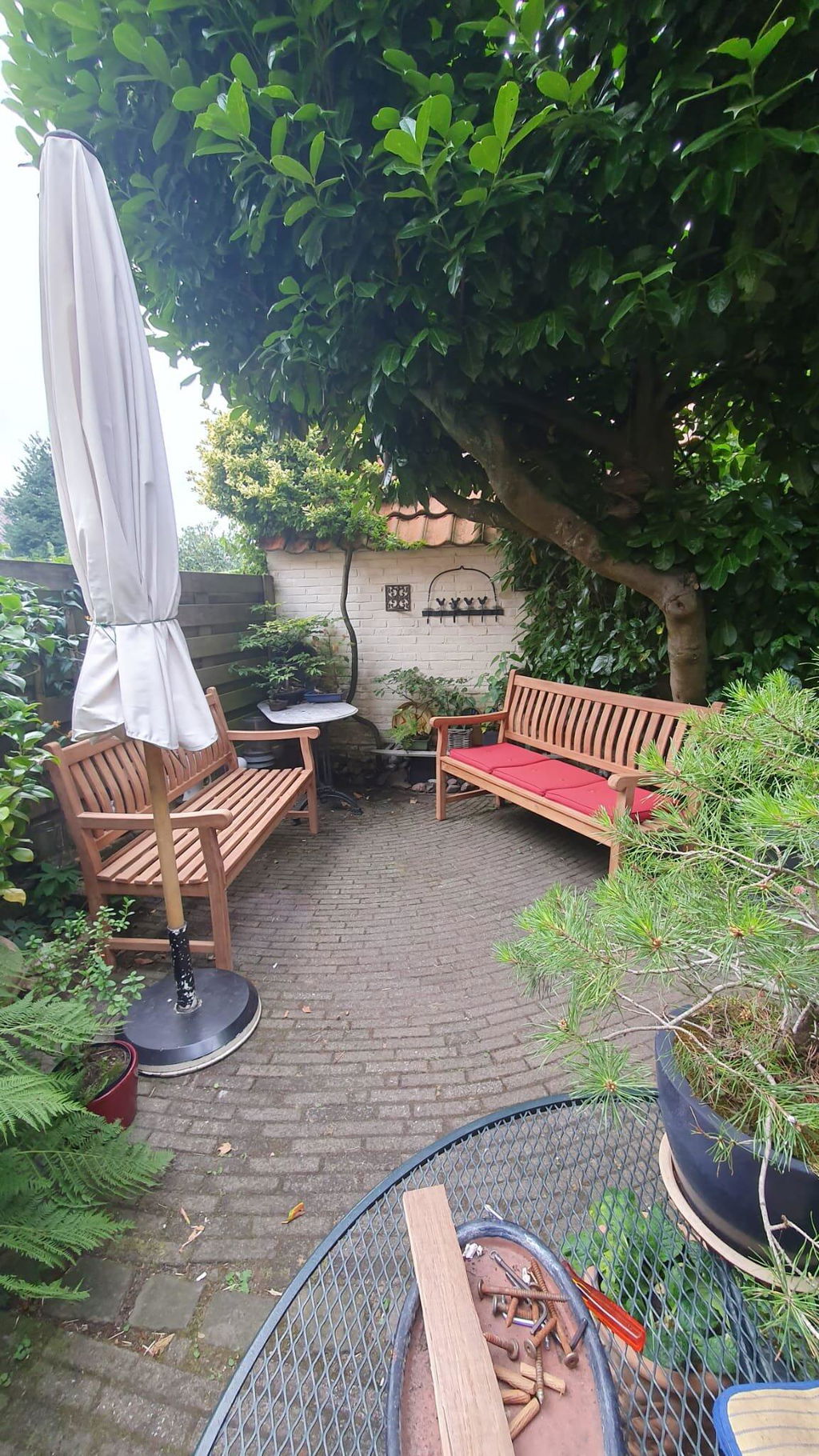
All benches in this collection are made from solid teak and sit at the same seat height (91 cm to top of backrest) and depth (64 cm), so your choice comes down to length and frame weight. The two main series differ in leg thickness — useful if you're weighing up robustness against a slightly lighter look:
| Series |
Leg thickness |
Available lengths |
Dimensions (W × D × H) |
| Dordogne |
5 cm |
120 / 150 / 180 / 210 / 250 cm |
Length × 64 × 91 cm |
| Bretagne |
4 cm |
120 / 150 / 180 / 210 cm |
Length × 64 × 91 cm |
| Norwich |
6 cm |
210 cm |
210 × 64 × 91 cm |
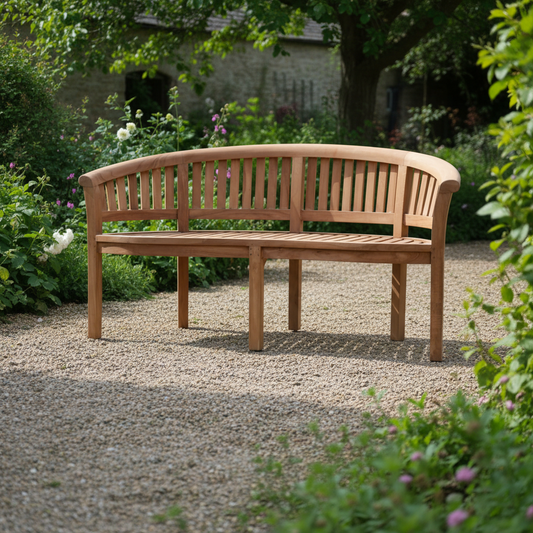
| Banana Bench |
— |
160 cm |
160 cm length |
Quick rule of thumb: allow roughly 60 cm of bench length per adult seated. A 120 cm bench seats 2 comfortably; 180 cm seats 3; 210–250 cm seats 4. The Norwich, with its 6 cm legs, is the chunkiest, most substantial frame in the range — ideal if you want a bench that makes a real statement on a wide terrace or in a larger garden.
Prefer a different timber or a lower price point? Browse our hardwood garden benches, our Douglas fir garden benches, or the spruce wooden garden benches for treated softwood options. For something truly unique, the tree-trunk benches are worth a look. You'll also find a curated range in the KING® garden bench collection.
Teak Outdoors — Why It Works So Well
Teak (Tectona grandis) contains a high concentration of natural oils and silica that protect the wood from the inside out. Left untreated, it weathers gradually to a silver-grey patina that many gardeners actively prefer. If you'd rather keep the warm honey-brown colour, a periodic application of teak oil is all it takes. Want to understand the timber in more depth? Our guide What is teak wood? covers grain structure, oil content and why teak outlasts most other garden timbers.
Maintenance in Three Steps
One of teak's biggest selling points is how little it demands of you. A basic annual routine keeps a bench looking its best for decades:
- Clean — brush off debris and wash with mild soapy water; rinse and allow to dry fully.
- Sand lightly (optional) — if the surface feels rough after winter, a light pass with 120-grit sandpaper along the grain restores smoothness.
- Oil (optional) — apply a thin coat of teak oil to retain the original colour; leave untreated if you prefer the silver-grey weathered look.
For a more detailed walkthrough, see our garden furniture maintenance tips or our dedicated page on teak furniture care.
Frequently Asked Questions
How long will a solid teak garden bench last?
With basic annual cleaning, a well-made solid teak bench will typically last 20–30 years outdoors — often significantly longer. The natural oils in the wood resist moisture, insects and rot without the need for chemical treatment.
Can I leave a teak bench outside all year in the UK?
Yes. Teak is one of the few timbers genuinely suited to year-round outdoor exposure in a temperate climate. If you want to slow the greying process over winter, a breathable furniture cover helps — but it is not strictly necessary.
What is the difference between the Dordogne and the Bretagne series?
Both series are made from the same solid teak and share identical seat depth (64 cm) and overall height (91 cm). The Dordogne has 5 cm legs; the Bretagne has 4 cm legs, giving it a slightly lighter, more slender appearance. The Dordogne is also available in a 250 cm length, whereas the Bretagne tops out at 210 cm. Not sure which material suits your garden best? Read our overview of the difference between teak and hardwood.