What is processed wood?
Engineered Wood: The Versatile Materials of the Modern Wood Industry
Engineered wood, also known as composite or manufactured wood, represents a revolutionary transformation in the wood industry. These innovative materials have emerged from the need to utilize wood scraps effectively, achieve more uniform properties, and deliver specific technical performances that solid wood cannot always provide. Instead of using a single log, wood fibers, chips, or layers are combined with binders to create a wide range of products with unique characteristics.

"Engineered wood offers new possibilities in design, engineering, and sustainability that traditional solid wood cannot match."
The Alchemy of Modern Woodworking: How Wood Scraps Transform into High-Quality Materials
The process of transforming wood scraps into high-quality panel materials is a fascinating example of modern industrial alchemy. What was once considered waste is now a valuable raw material in a circular system.
Gathering Raw Materials
Wood scraps such as sawdust, chips, fibers, or thin layers are collected from sawmills and other woodworking processes.
Processing and Separation
The raw materials are sorted, cleaned, and sized appropriately for the specific end product.
Adding Binders
Resins, adhesives, or other binders are added to bond the wood elements together into a coherent material.
Forming and Pressing
The mixture is formed into mats or layers and then pressed under high pressure and temperature to activate the binder.
Finishing
The panels are cut to size, sanded, and often provided with protective layers or decorative surfaces.
This process allows manufacturers to precisely control the properties of the end product, from density and strength to moisture resistance and fire retardancy, resulting in materials optimized for specific applications.
The Spectrum of Manufactured Wood: An In-Depth Overview of Key Variants

- Made from wood chips and shavings mixed with binder
- Uniform internal structure without direction
- Lower strength than MDF or plywood
- Susceptible to moisture without protective finishing

- Made from fine wood fibers under high pressure
- Homogeneous, dense structure without internal defects
- Excellent for detailed milling and profiles
- Heavier than particle board, more stable edges

- Constructed from multiple layers of veneer glued in opposing directions
- Very good strength-to-weight ratio
- Dimensionally stable due to cross-laminated construction
- Available in various qualities and wood species

- Made from oriented wood strands in multiple layers
- Good strength and stiffness in all directions
- Rough surface with characteristic appearance
- Cost-effective for structural applications
Architectural Marvels: LVL, CLT, and Other Advanced Wood Composites
In addition to the ubiquitous panel materials, the modern wood processing industry has also developed a number of high-quality structural materials that offer new possibilities in architecture and construction.
LVL (Laminated Veneer Lumber)
LVL consists of thin layers of wood veneer that are all oriented and glued in the same direction. This construction creates an extremely strong, straight, and stable material that is ideal for load-bearing structures where traditional solid beams would be too limited or expensive.
- Can carry larger spans than natural wood
- Dimensionally very stable (minimal deformation)
- Consistently predictable technical properties
- Available in longer lengths than standard lumber
CLT (Cross-Laminated Timber)
CLT is a revolutionary building material made up of multiple layers of solid wood glued together in a crosswise manner. The result is a solid panel that can take on the load-bearing function of concrete or steel, but with a fraction of the ecological footprint.
- Possible to construct high-rise buildings entirely in wood
- Excellent insulation values and airtightness
- Fast construction time due to prefabricated elements
- Supports CO₂ storage in buildings
I-Joists
I-Joists are shaped like a capital "I" and combine the strength of LVL or solid wood for the flanges (top and bottom) with a web of OSB or plywood. This construction maximizes the strength-to-weight ratio.
- Lightweight yet very strong
- Suitable for long spans
- Easy passage for pipes and ducts
- Minimal deformation under load or moisture changes
Glulam (Glued Laminated Timber)
Glulam is made by gluing together multiple layers of smaller sawn wood into larger elements. Unlike LVL, it can be made into curved shapes, offering unique aesthetic and structural possibilities.
- Can achieve free spans of up to 45 meters
- Formable into elegant curved structures
- Excellent fire resistance and thermal insulation
- Visually appealing for exposed applications
The Chemical Bonds: Adhesives and Binders Transforming the Industry
The evolution of engineered wood is closely tied to the development of increasingly advanced adhesives and binders. These chemical compounds are the invisible heroes that transform wood scraps into high-quality materials.
| Type of Binder | Main Properties | Materials Used | Environmental Aspects |
|---|---|---|---|
| Urea-Formaldehyde (UF) | Inexpensive, quick curing, light color | Particle board, MDF, interior plywood | May emit formaldehyde, suitable for indoor use only |
| Phenol-Formaldehyde (PF) | Water-resistant, high strength, dark color | Exterior plywood, OSB, HDO/MDO | Lower emissions than UF, but still contains formaldehyde |
| Melamine-Urea-Formaldehyde (MUF) | Better water resistance than UF, light color | Moisture-resistant MDF and particle board | Medium formaldehyde emissions |
| Polyurethane Adhesive (PUR) | Formaldehyde-free, high strength, flexible | CLT, Glulam, high-quality applications | No formaldehyde, but contains isocyanates |
| Soy-Based Adhesives | Biobased, low toxicity, sustainable | Newer versions of plywood and particle board | Renewable resources, very low emissions |
The Emission Evolution
In recent decades, stringent regulations and consumer demand have led to a dramatic reduction in formaldehyde emissions in engineered wood. Modern products often have emissions that are barely higher than natural background levels in the air. Labels such as "E1", "CARB Phase 2", and "NAF" (No Added Formaldehyde) help consumers make informed choices.
Sustainability in Perspective: The Ecological Footprint of Engineered Wood
Engineered wood occupies an intriguing position from a sustainability perspective. On one hand, it makes efficient use of wood scraps and small trees that might otherwise go to waste. On the other hand, some types of engineered wood contain chemical binders that raise questions about toxicity and recyclability.
The sustainability balance heavily depends on:
- Source of the wood (certified sustainably managed?)
- Type and amount of binders used
- Energy consumption during the production process
- Longevity of the end product
- Opportunities for reuse or recycling
"The most sustainable approach is to choose the right material for the right application, based on technical requirements, lifespan, and reusability. Sometimes that’s solid wood, sometimes it’s an engineered variant." — Prof. Maria Bosman, sustainability expert
The Future of Manufactured Wood: Innovations on the Horizon
The engineered wood industry continues to innovate, with developments aimed at improving performance and sustainability:
Biobased Binders
Research into adhesives based on lignin, tannins, and other plant components promises products that are completely free of petrochemicals.
Nanocellulose Reinforcement
By adding nanocellulose fibers to the adhesive matrix, stronger panels can be created with less glue, leading to lighter and more environmentally friendly products.
3D-Printed Wood Composites
Combinations of wood fibers and biodegradable polymers are being developed for 3D printing applications, enabling complex wood structures without traditional machining techniques.
Transparent Wood
By removing lignin and impregnating the material with polymers, wood can be made transparent or translucent, opening up new applications in architecture.
Practical Considerations: Choosing the Right Engineered Wood for Your Project
When selecting the ideal engineered wood material for your project, consider these important factors:
Strength and Structural Requirements
For load-bearing applications, it’s best to choose:
- Construction-grade plywood: Excellent for floors, walls, and roofs
- OSB/3 or OSB/4: Good cost-effective option for structural work
- LVL or Glulam: For larger spans and heavy loads
- CLT: For full wall elements and floor slabs in larger projects
For non-load-bearing applications, MDF and particle board are often sufficient.
Moisture Resistance
Consider the humidity level of the environment:
- Dry environment (living room, hallway): Standard particle board or MDF is sufficient
- Increased moisture risk (kitchen): Moisture-resistant MDF or particle board (green core)
- Moist environment (bathroom): Waterproof plywood, cement-bonded fiberboard
- Outdoor application: Weather-resistant OSB/3, Marine-grade plywood, modified wood
Pay attention to the correct classification: V313 (moisture-resistant) versus V100 (waterproof) makes a significant difference in performance.
Finishing Options
The quality of the surface affects the finishing options:
- MDF: Excellent for painting or veneering, thanks to a smooth, consistent surface
- Particle Board: Less suitable for direct finishing, often used with melamine or laminate
- Plywood: Available in various surface qualities (A/B/C/D) for diverse finishes
- OSB: Characteristic texture, often left visible for an industrial aesthetic
For projects requiring a high-quality finish, MDF is often the best choice unless strength is a primary consideration.
Emission Categories and Indoor Air Quality
Especially for indoor spaces, emission levels are important:
- E1 classification: Standard in Europe, max. 0.1 ppm formaldehyde emission
- CARB Phase 2: Stricter US standard, often required for products in California
- NAF/ULEF: No-Added Formaldehyde or Ultra-Low Emitting Formaldehyde products
- F-stars (F★★★★): Japanese classification, four stars means lowest emissions
For bedrooms, children's rooms, and spaces for individuals with respiratory issues, always choose the lowest possible emission category.
Conclusion: Unlocking the Full Potential of Engineered Wood
Engineered wood represents a remarkable evolution in how we interact with one of our oldest building materials. By combining the natural variability of wood with modern technology, we have created materials that offer new possibilities for designers, builders, and manufacturers.
Whether you are a furniture maker looking for the perfect material for a sleek modern cabinet, a contractor seeking a cost-effective construction solution, or an architect dreaming of towering wooden buildings – engineered wood provides options that solid wood alone cannot deliver.
With ongoing innovations in biobased binders, advanced production methods, and new application areas, engineered wood will play an increasingly important role in our transition to a more sustainable built environment.
"Engineered wood embodies the perfect balance between tradition and innovation – it honors the timeless qualities of wood while transforming it to meet modern needs."
Super Sales
-
Liora Flow Coffee Table – Cream Organic Masterpiece
Regular price €129,95 EURRegular price€179,95 EURSale price €129,95 EURSale -
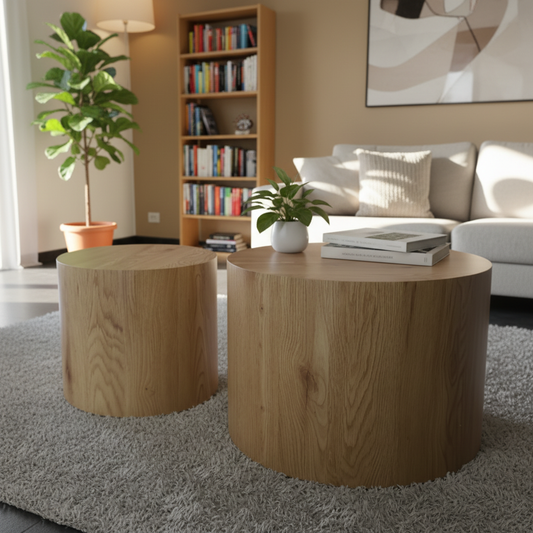
Round Wooden Coffee Table Set of 2
Regular price €54,95 EURRegular price€99,95 EURSale price €54,95 EURSale -
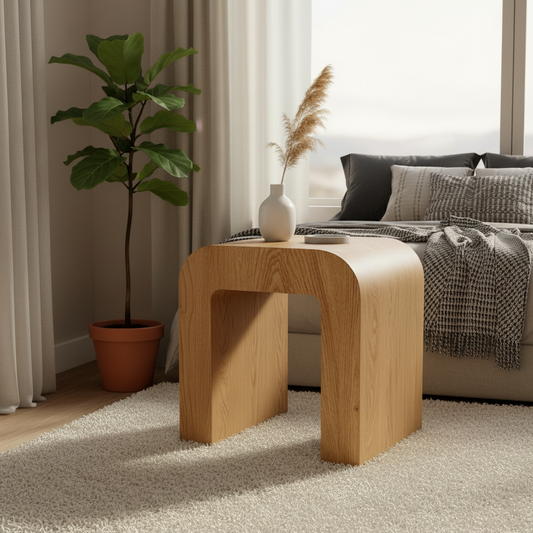
Modern Curved Side Table in Wood-Look Finish – 40 × 30 × 45 cm
Regular price €39,95 EURRegular price€69,95 EURSale price €39,95 EURSale -
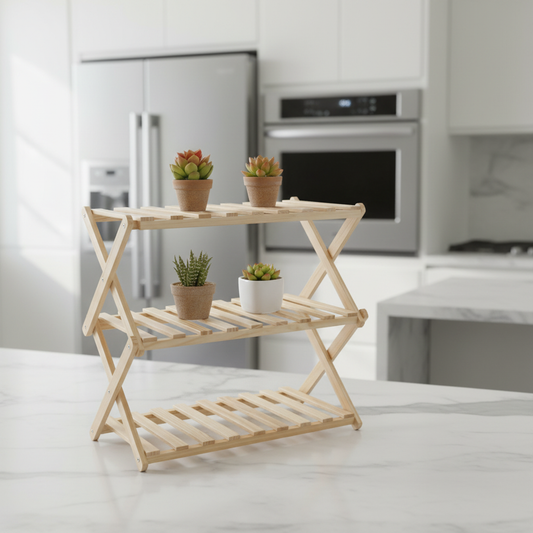
Foldable Wooden Rack – 3 Tiers (31 × 21 × 47.2 cm)
★★★★★(1)Regular price €22,95 EURRegular price€49,95 EURSale price €22,95 EURSale -
Beech Wood Coat Rack – Minimalist Tripod Design
★★★★★(1)Regular price €39,95 EURRegular price€79,95 EURSale price €39,95 EURSale -
Vintage Wooden Jewelry Box with Floral Motif and Handle – 26 × 18 × 17 cm
★★★★★(1)Regular price €18,95 EURRegular price€39,95 EURSale price €18,95 EURSale -
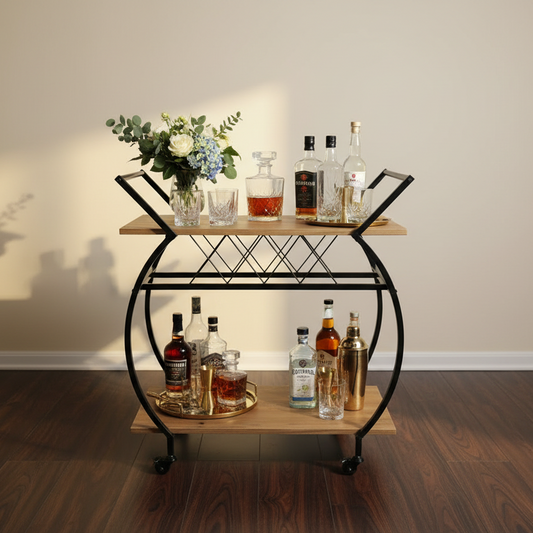
Bar cart with wine rack – 2 tiers, wood & metal, on wheels – rustic oak look – KING®
★★★★★(2)Regular price €79,95 EURRegular price€149,95 EURSale price €79,95 EURSale -
Listerby Side Table – 50 cm
★★★★★(5)Regular price €59,95 EURRegular price€139,95 EURSale price €59,95 EURSale -
Round nesting coffee table set – 2-piece with metal frame (Ø60 x 39 cm) - Second choice
★★★★★(1)Regular price €59,95 EURRegular price€99,95 EURSale price €59,95 EURSale -
Round Bedside Table with 1 Drawer – Curved Design (Ø45 × 50 cm)
Regular price €29,95 EURRegular price€59,95 EURSale price €29,95 EURSale -
Modern Wooden Shoe Rack – 3 or 4 Tiers
★★★★★(1)Regular price From €29,95 EURRegular price€49,95 EURSale price From €29,95 EURSale -
Round Side Table Ø40 × 48 cm – Oak-Look Finish
Regular price €39,95 EURRegular price€79,95 EURSale price €39,95 EURSale